eVoting: Complete Guide to Types of eVoting, Benefits and Right2Vote Platform
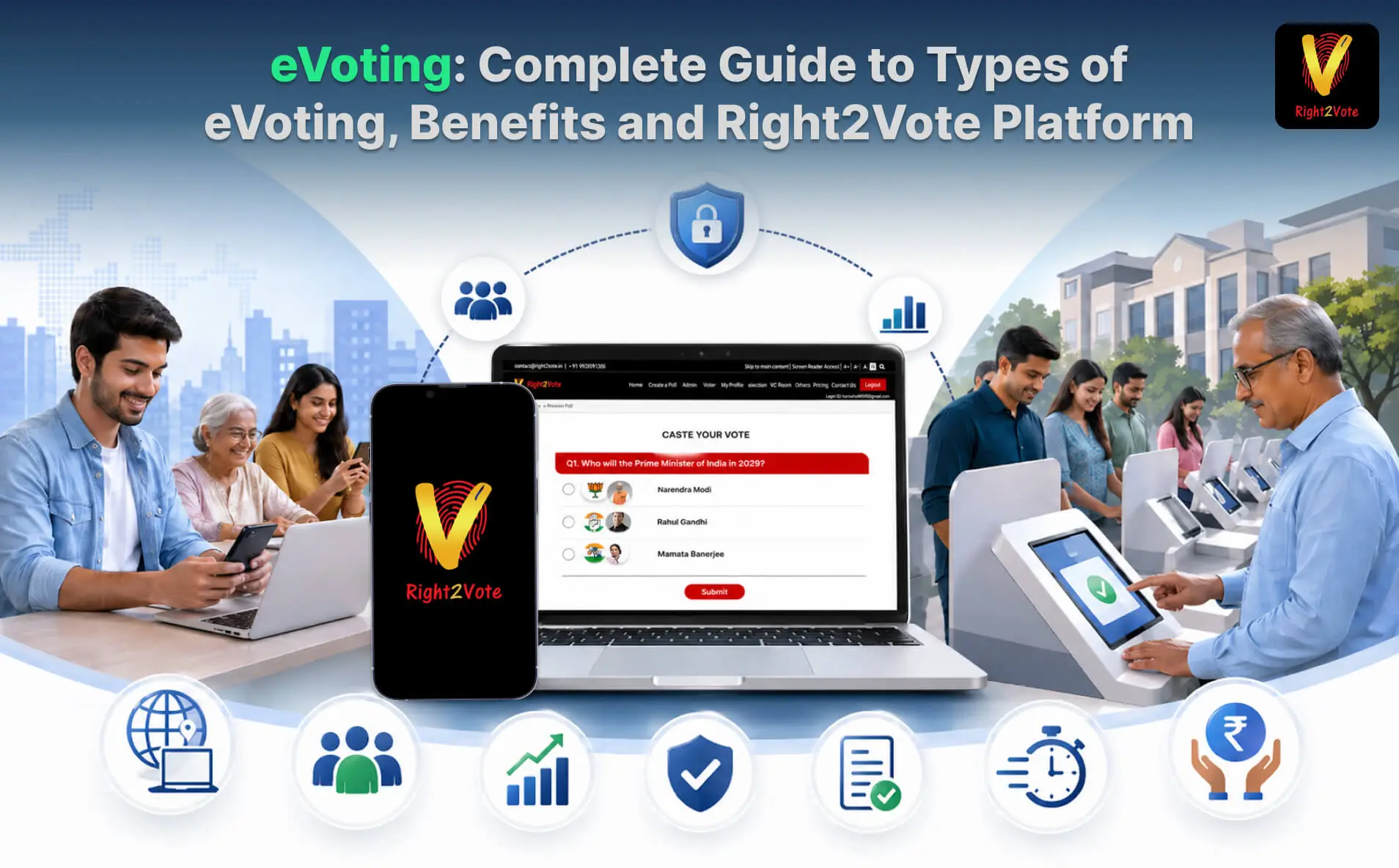
Almost every service has moved online. Banking, shopping, education, meetings and communication are now easier through technology. So why should voting remain slow, manual and difficult? This is where eVoting comes in. eVoting is changing the way organizations, associations, housing societies and RWAs, clubs and institutions conduct elections.
Many people today search questions like What is eVoting? Is eVoting safe? Can housing society elections be done online? Which is the best eVoting platform? These questions are common because organizations now want faster, transparent and easier election systems. Traditional paper ballot elections often create delays, low voter turnout, counting confusion and management stress. That is why eVoting is becoming popular across India and worldwide. From associations to RWAs and housing societies, digital elections are helping organizations save time and improve trust. eVoting is no longer a future concept; it is becoming the present need for smooth elections.
This blog explains eVoting (electronic voting) as a modern alternative to traditional paper-based elections. It highlights how eVoting makes the process faster, more secure, cost-effective and convenient, while solving common issues like low participation, manual errors and delayed results.
It also covers the three main types of eVoting: Remote, Booth-Based and Hybrid helping organizations choose the best method based on their needs. Finally, the blog presents Right2Vote as a trusted platform with proven experience, certifications and a simple, secure voting process for conducting smooth and transparent elections.
What is eVoting?
Many users search online asking What does eVoting mean? How does eVoting work? Is eVoting better than paper voting? eVoting stands for Electronic Voting, where votes are cast through a secure digital platform instead of paper ballot slips. It allows election officers to manage voters, candidates, schedules and results through a structured system. Members can vote through mobile, laptop, computer or digital booth depending on the election type. eVoting reduces manual errors and makes counting faster. It also improves convenience for voters who may otherwise skip elections due to time, travel or other difficulties. .
In traditional voting, ballot papers are printed, distributed, manually marked, collected and counted. This process can take a lot of time and money. It may also face issues such as invalid votes, human errors, delays and low voter turnout.
With eVoting, the complete election process becomes faster, smarter and more efficient.
Main benefits of eVoting:
- Fast voting process
- Instant or quick results
- Higher voter participation
- Reduced paperwork and cost
- Transparent counting system
- Secure and controlled access
- Easy management for election officers
Why People Prefer eVoting Today
People often think Why should we move from paper ballots to eVoting? Is it really useful for small elections? The answer is yes. Even small organizations face common election problems like poor participation, printing costs, counting disputes and delays in result declaration. eVoting solves these issues by automating the process in a secure and transparent way. Election officers can manage the election more professionally, while members enjoy a smoother experience. Whether it is a club election or a housing society vote, people prefer systems that are simple, fast and trusted. That is why eVoting demand is increasing rapidly.
Types of eVoting
There are different types of eVoting systems based on the needs of an election. Let us understand all major types briefly.
Many people ask How many types of eVoting are available? Which type is best for our society or association? The answer depends on voter convenience, election rules and management preference. There are mainly three popular types of eVoting systems used today: Remote eVoting, Booth Based eVoting and Hybrid eVoting. Each model is useful for different situations. Some organizations want fully online participation, while others prefer physical presence. Some want both options together. Understanding these types helps election committees choose the best method according to voter profile, location and constitution guidelines.
Remote eVoting / Online Voting
Can members vote from home? Can NRIs or outstation members vote? Is online voting safe? Remote eVoting is the most convenient type of eVoting because voters can cast votes from anywhere using mobile phones, laptops or computers. They receive login credentials, OTP or secure links to access the voting portal. This system is ideal for associations whose members live in different cities or have busy schedules. It helps senior citizens, working professionals and travelling members participate easily. Remote eVoting usually gives higher turnout because voters do not need to physically visit a polling venue.
Best for:
- Housing societies
- RWAs
- Professional associations
- Clubs
- Trade bodies
- Company elections
- Multi-city organizations
Benefits:
- Maximum voter participation
- No need to travel
- Easy for senior citizens
- Convenient for busy professionals
- Fast and cost-effective
This is one of the most advantageous ways to conduct elections because it solves many voting challenges.
Booth Based eVoting / Digital Booth Voting
Can we keep physical voting but remove paper ballots? Can society elections happen inside premises digitally? Yes, Booth Based eVoting is the perfect solution. In this model, voters come physically to a designated location where computers, tablets or digital devices are installed. Members verify identity and cast votes digitally at the booth. It combines the trust of physical voting with the speed of modern technology. This is highly suitable for housing societies, cooperatives, unions and committees that want controlled elections with on-site supervision. Counting becomes faster and disputes reduce significantly.
Best for:
- Housing society elections
- Association elections
- Cooperative society elections
- Unions
- Institutions preferring physical presence
Benefits:
- Physical supervision available
- Digital counting system
- No paper ballot confusion
- Quick results
- Trusted by traditional committees
If your election officer or committee is not agreeing for online voting, ask them to conduct eVoting using booth-based voting. It gives the comfort of physical voting with the speed of technology.
Hybrid eVoting
Can some people vote online and some vote physically? What if members have different preferences? Hybrid eVoting solves this challenge. It combines Remote eVoting and Booth Based eVoting into one election system. Members who are travelling, busy or living outside can vote online, while those who prefer coming physically can vote at the booth. This model increases inclusiveness because every voter gets a suitable option. Hybrid voting is excellent for large associations, professional bodies and societies with mixed age groups. It helps maximize participation while keeping the election process organized and efficient.
Best for:
- Large organizations
- Mixed age-group voters
- Members living in different cities
This model ensures every voter gets a suitable voting option.
Why Online Voting is the Most Advantageous Method
Online voting removes many common barriers that stop people from voting. Members no longer need to stand in queues, travel long distances or wait for manual counting. Busy professionals can vote during breaks, senior citizens can vote comfortably and outstation members can participate without returning physically. Election committees save money on paper, staff and logistics. Results can be prepared quickly after closure. Because of convenience and wider reach, online voting is considered one of the most advantageous forms of eVoting today.
Challenges solved by Online Voting:
- Members staying outside city can vote
- Busy working members can participate
- No long queues
- No printing cost
- No manual counting delay
- Higher voter turnout
- Better convenience for all age groups
For associations and societies where participation is always low, online voting can dramatically improve turnout.
Why Digital Booth Voting is Best for Associations, Housing Societies and RWAs
Many committees think Our members trust physical elections more. Is there any modern option without paper ballots? Yes, Digital Booth Voting is highly suitable for associations, RWAs and housing societies. It allows elections within the premises while replacing old paper systems. Members feel comfortable because they are voting physically in a supervised environment. At the same time, counting becomes accurate and quick. There is less confusion over invalid ballots, duplicate slips or counting disputes. This system is easy to implement and gives committees confidence while moving toward modern election practices.
Why it works:
- Members vote within society campus
- Committee feels secure and supervised
- No ballot paper wastage
- No counting fights or disputes
- Quick and accurate results
- Easy to implement
This is highly recommended where committees want physical presence but also want modern election efficiency.
If Constitution Does Not Allow Online Voting
Many office bearers ask Our bye-laws or consitution do not mention online voting. What can we do now? This is a common issue faced by societies and associations.
Option 1: Amend the Constitution / Bye-laws
The first solution is to pass amendments in the constitution or rules allowing digital voting systems. This helps future elections become smoother and legally clearer.
This is the long-term modern solution.
Option 2: Use Digital Booth Based Voting
If immediate amendments are not possible, conduct Booth Based Digital Voting where members vote physically through electronic systems. This transitional method helps committees adopt technology without major resistance.
This helps organizations move toward digital elections smoothly. Many organizations first start with digital booth voting and later shift toward remote online voting.
Right2Vote eVoting Platform
When selecting an eVoting platform, trust and experience matter the most.
Which is the best eVoting company in India? Who has real experience? Which platform is trusted? Right2Vote is a leading eVoting platform that has been conducting elections for the last 11 years. It has completed more than 21,000 elections across associations, housing societies, institutions, corporates, unions and many organizations. The platform is known for smooth execution, transparent process and scalable systems. Experience matters in elections because every voting event requires planning, trust and technical reliability. Right2Vote has built a strong reputation through long-term consistent performance.
Key Achievements:
- Conducted more than 21,000+ elections
- Trusted by associations, housing societies and rwa, unions, corporates and institutions
- Secure, scalable and transparent platform
- Experienced election management team
Certifications & Trust Marks:
Right2Vote has strong credibility with major certifications including:
- STQC Certified (Thrice) with CQW Mark
- MCA approval
- ISO 27001 Certification
- Multiple security certifications for safe eVoting processes
These certifications reflect commitment toward security, privacy, quality and compliance.
Do not fall for fake or misleading certifications shown by unknown organizations. Always verify whether the platform has genuine certifications and real election experience.
How Right2Vote eVoting Works
If we choose online voting, what will happen step by step? Is it difficult for members? The process is simple and user-friendly. First, the authorized voter list is uploaded. Then secure credentials such as OTP, passwords or login links are sent to voters. Members login through mobile or computer and cast votes within the election schedule. Votes are securely stored in the system. After the voting period closes, results can be generated for authorized officials. This makes elections easier for both organizers and voters while maintaining structured control.
Remote eVoting Process
Step 1: Voter List Upload
Election authority uploads approved voter list.
Step 2: Secure Login Credentials
Voters receive secure login links and OTP based password.
Step 3: Voting Starts
Voters login from mobile or computer and cast vote.
Step 4: Encrypted Vote Storage
Votes are securely recorded in the system.
Step 5: Result Declaration
After election ends, authorized officials can declare results.
Booth Based eVoting Process
Step 1: Setup Digital Booth
Computers/tablets installed at polling venue.
Step 2: Voter Verification
Members are verified before voting and provide unique code.
Step 3: Digital Vote Casting
Voter enter the unique code and selects candidate digitally.
Step 4: Instant Secure Count
Votes are stored securely.
Step 5: Fast Results
Results can be declared quickly after closing.
Conclusion
Many people searching today ask Should we choose eVoting now or continue with old paper methods? The answer depends on whether you want better participation, faster results and easier management. eVoting is clearly the smarter direction for modern organizations. If convenience is priority, choose Remote eVoting. If physical presence matters, choose Booth Based eVoting. If both are needed, choose Hybrid eVoting. With 11 years of experience, 21,000+ elections and trusted certifications, Right2Vote offers a reliable solution. Modern elections deserve modern systems and eVoting is the future.
- Want convenience? Choose Remote eVoting
- Want physical supervision? Choose Booth Based eVoting
- Want both? Choose Hybrid eVoting
Modern elections need modern solutions. The future is of democracy is eVoting.
 Change The Election Method, Not The Officer
 NOTA Never Wins: What Is NOTA in Indian Elections?
 How to Conduct an AGM Online: A Complete Guide to Online Meetings and Voting
 Digital Nomination: Making Election Nominations Simple, Accessible and Efficient