Right2Vote’s Blockchain Technology in eVoting: Making Digital Elections Secure and Trustworthy
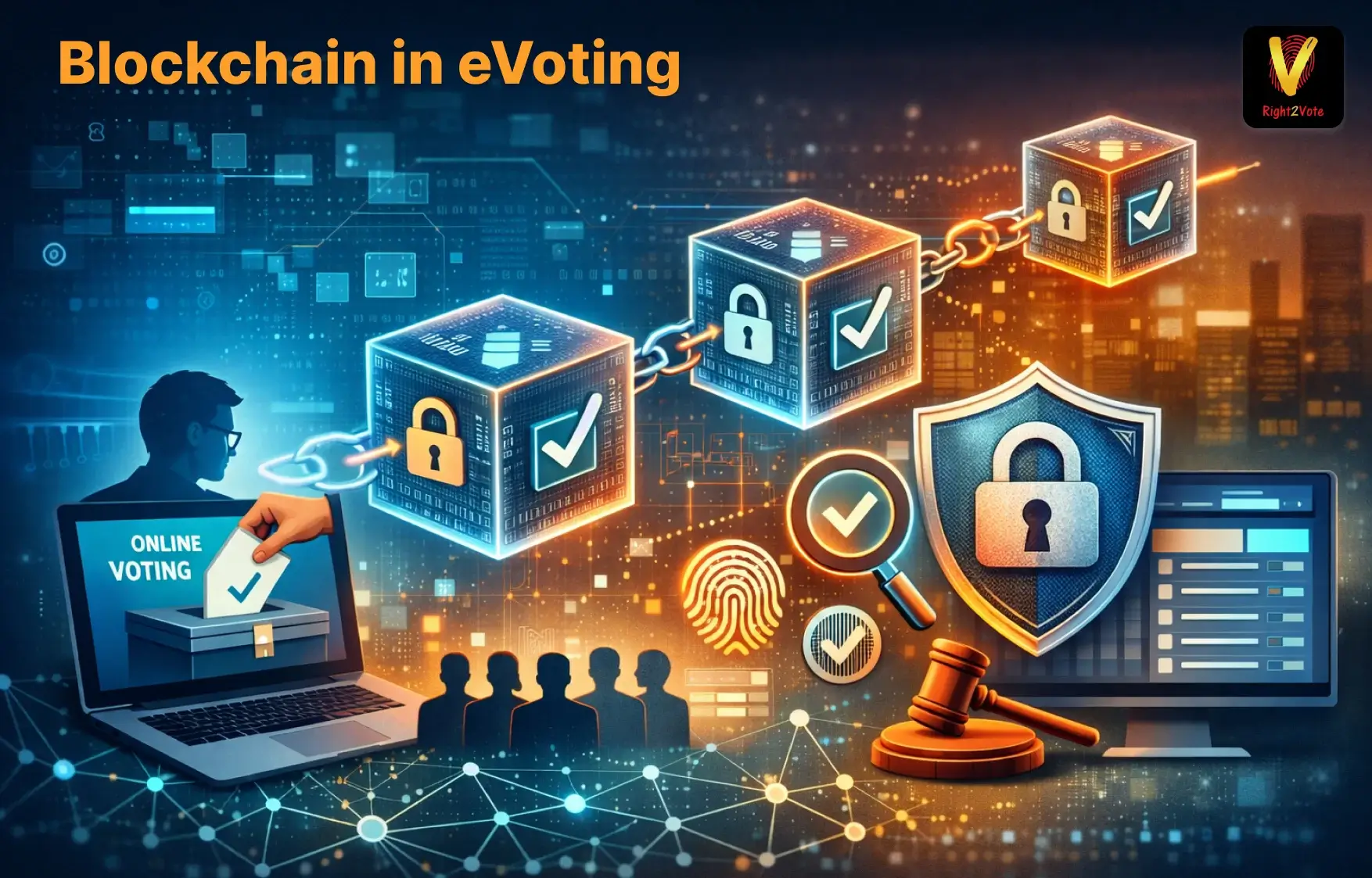
Elections are not just about choosing leaders; they are about trust. Whether it is a housing society election, a medical association vote, or a college council election, people want to be sure that their vote is counted correctly and fairly. As voting systems move from paper ballots to online voting systems, many people worry about hacking, data manipulation and misuse of power. This is where blockchain technology becomes important. Right2Vote, India’s trusted eVoting platform, uses advanced security frameworks inspired by blockchain principles to deliver transparent and reliable digital elections. With more than 10 years of experience and 21,000+ successful elections, Right2Vote shows how technology and trust can work together. In this blog, we explain blockchain technology, its types, how it is used in eVoting, how it improves security and why Right2Vote is a trusted name in secure digital voting.
What Is Blockchain Technology?
Blockchain technology is a decentralized, distributed digital ledger that records transactions in a secure, transparent and tamper-proof manner. It is a way of storing data in a secure and transparent manner. Instead of keeping information in one central server, blockchain spreads data across many systems connected in a network. Each piece of data is stored in a “block,” and these blocks are connected one after another, forming a “chain.” That is why it is called blockchain.
Each record, known as a block, contains:
- A set of transactions or data entries
- A timestamp
- A cryptographic hash of the previous block
Once information is added to a block, it cannot be changed or deleted. If someone tries to modify the data, the system immediately detects it. This makes blockchain very useful for systems where trust and accuracy are important, such as banking, supply chains, and now voting.
In simple terms, blockchain works like a shared record book that many people can see, but no one can secretly change. Every entry has a time stamp and a digital signature, which keeps the data safe and traceable. In eVoting, this means every vote is securely recorded and protected from manipulation.
Because blockchain does not depend on one single authority, it reduces the risk of misuse, fraud or technical failure. This is why blockchain is considered one of the strongest technologies for building secure and transparent digital voting systems.
Types of Blockchain Technology
Blockchain technology is not one-size-fits-all. Depending on the use case, different types of blockchains are implemented.
Public Blockchain
The most common type is Public Blockchain, where anyone can join the network and see the transactions. Cryptocurrencies like Bitcoin use public blockchains. While this type offers full transparency, it is not ideal for voting because elections need privacy and controlled access.
Private Blockchain
Private Blockchain, which is managed by a single organisation. Only authorised users can access the system. This type is faster and more controlled, making it useful for enterprise systems, but it requires trust in the organisation running it.
Consortium (Permissioned) Blockchain
Where control is shared among a group of trusted entities. This model balances transparency and security and is well-suited for regulated systems like eVoting.
Hybrid Blockchain
The fourth type is Hybrid Blockchain, which combines features of both public and private blockchains. Some information is public, while sensitive data remains private. For voting systems, hybrid and permissioned blockchains are the most useful because they protect voter privacy while allowing audits and verification.
Is Blockchain Technology Used in eVoting?
Yes, blockchain technology is increasingly being used in eVoting systems around the world, especially for organizational and institutional elections. Traditional online voting systems rely on centralized servers, which can raise concerns about hacking, insider access, or data manipulation. Blockchain helps reduce these risks.
Traditional online voting systems depend on centralized servers, which can raise concerns about:
- Data manipulation
- Insider threats
- Single point of failure
- Limited transparency
In a blockchain-based eVoting system, each vote is recorded as a secure transaction. Once the vote is cast, it becomes part of the blockchain and cannot be changed. This ensures that votes remain exactly as they were submitted.
For voters, this means confidence that their vote is counted correctly. For election authorities, it means transparent counting and easy auditing. Blockchain also helps ensure that no one can vote more than once and that only eligible voters can participate.
Right2Vote uses advanced secure technologies, combined with audit trails and cryptographic protections, to provide blockchain-level trust in its eVoting platform. The system ensures fairness, transparency, and reliability at every stage of the election process, from voter verification to result declaration.
How Blockchain Helps in Digital Voting
Blockchain technology improves digital voting in many ways. First, it helps in secure vote recording. Once a voter casts a vote, it is encrypted and recorded permanently. No one can modify or delete it later. Each voter is authenticated using secure digital verification methods. Once authenticated, the vote is linked to a cryptographic identity, not the voter’s personal details, ensuring privacy and anonymity.
Second, blockchain helps prevent duplicate voting. Each voter can vote only once, and the system automatically blocks repeat attempts. This ensures fairness in elections.
Third, blockchain supports transparency and verification. Election organisers can verify the total number of votes and results without seeing who voted for whom. This protects voter privacy while maintaining trust.
Fourth, blockchain creates audit trails. Every action in the election process is recorded, making it easy to audit and verify results if needed.
At Right2Vote, these principles are applied through secure digital architecture, ensuring that elections are smooth, tamper-proof and trustworthy. The platform combines technology with strict process controls to deliver reliable eVoting experiences.
What Happens When People Vote Using Blockchain in eVoting?
Imagine a housing society election using blockchain-based eVoting. A voter logs in using secure authentication and casts a vote online. The vote is encrypted and recorded as a digital entry with a timestamp. Once recorded, it cannot be changed or removed.
Even if someone tries to manipulate the result, the system will reject the attempt because the blockchain record will not match. All votes are counted automatically, and results are generated transparently.
This process builds confidence among voters because they know the system is fair, secure, and reliable.
Security Benefits of Blockchain Technology in eVoting
Security is the biggest concern in digital voting, and blockchain addresses this very effectively. One major advantage is that blockchain data cannot be altered. If someone tries to change a vote, the system immediately detects the mismatch.
Another benefit is decentralization. Since data is not stored in one single place, there is no single point of failure. This reduces the risk of cyberattacks.
Blockchain also uses strong encryption, which protects votes during transmission and storage. Even system administrators cannot see individual votes, ensuring complete confidentiality.
Right2Vote strengthens these security benefits further with government-approved certifications like STQC, ISO 27001, CERT-In empanelment, and MCA compliance. These certifications prove that the platform follows the highest standards of data security and cyber protection.
Right2Vote: India’s Trusted Blockchain-Enabled eVoting Platform
Right2Vote has been providing secure digital voting solutions for more than 10 years. The platform has successfully conducted 21,000+ elections and manages over 3,000 elections every year.Right2Vote is trusted by medical associations, RWAs, housing societies, clubs, associations, colleges and schools across India and the World. Its strong security framework, government certifications and proven experience make it a reliable choice for digital elections.
Right2Vote offers clients Blockchain as an optional premium feature. Right2Vote’s end-to-end encryption, multi-factor authentication, secret ballot, audit trail, voter receipt, voter selfie and other security and transparency features ensure 100% security and transparency. However, some organisations still want an extra layer of security in the form of blockchain.
Data storage via blockchain is tamper-proof, as explained above, due to the block and chain method. Certain elections are so sensitive that people do not want to trust the management committee, the election officer and also the software company. In such cases, Right2Vote provides the option to organisations to save a copy of the vote data on a blockchain-enabled cloud server under the control of the independently appointed election committee.
The premium feature of Blockchain is not suited for all elections. For low-value elections or elections without a secret ballot, blockchain is an overkill. The blockchain technology is very costly as it creates multiple distributed ledgers. 1000 ledger means 1000x computing requirement. This increases the computing and digital storage costs substantially.
Another disadvantage of blockchain is the speed. As data is stored in multiple ledgers, and a block of data is formed at regular intervals, this slows down the speed. The client opting for the blockchain method should be open to compromise on speed.
The blockchain premium feature is a good option for elections where security, transparency, and perception of security & transparency are very important and there are no budget constraints.
By combining blockchain-inspired security, certified systems, and real-world experience, Right2Vote continues to lead the future of secure and transparent eVoting in India.
 Kerala Assembly Election 2026: Key Issues, Parties and Who Might Win
 Assam Election 2026: Key Facts, Political Battle & What’s at Stake
 West Bengal Election 2026: More Than an Election, A Turning Point for Bengal
 Postal Ballot System in India: How Online Voting by Mail Works