The BENPOS Access Debate: Control vs Transparency in Corporate Governance E-Voting
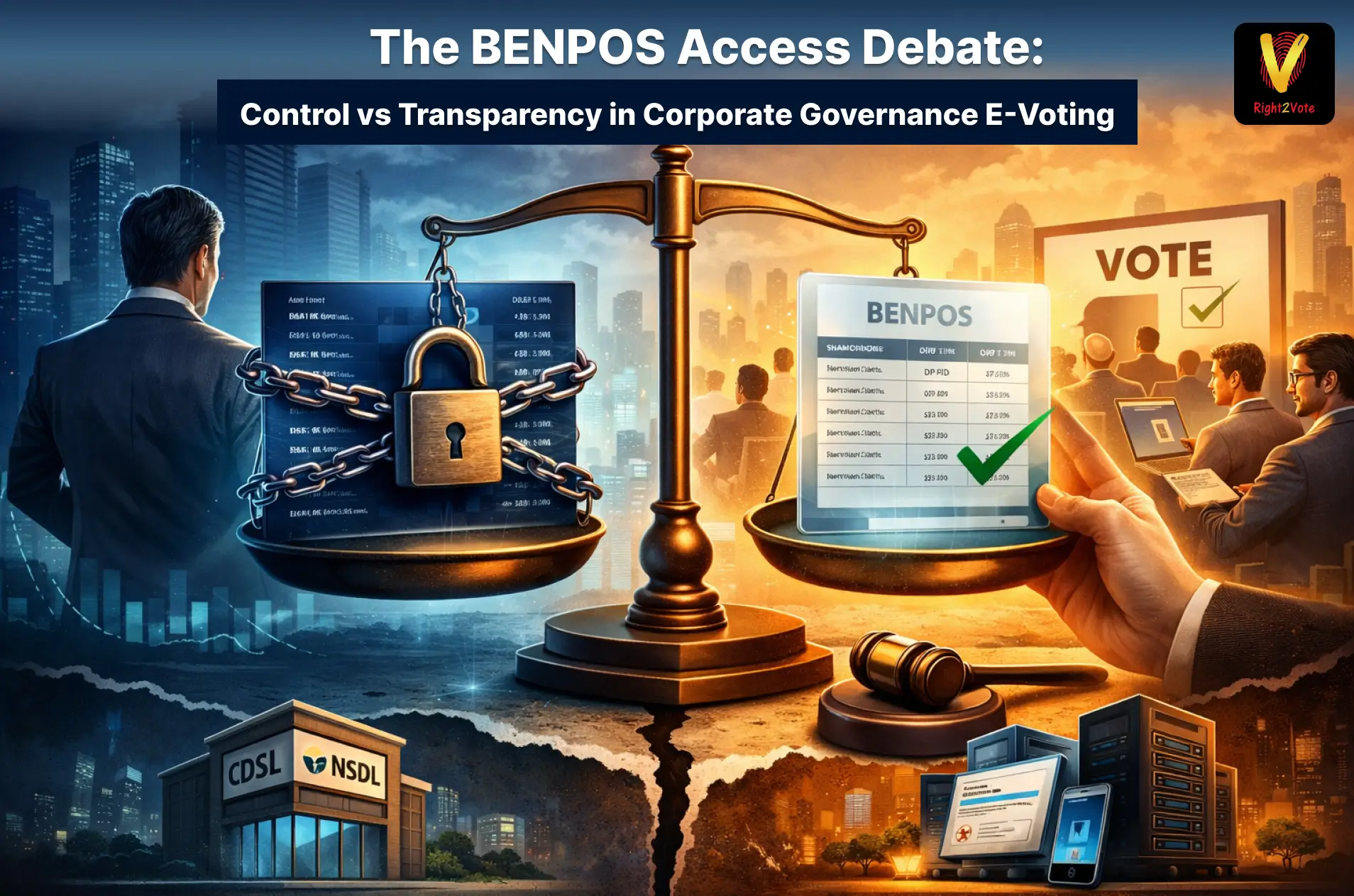
Corporate democracy is built on a simple promise that every shareholder has a voice. But what happens when that voice depends on access to data controlled by someone else? If multiple eVoting platforms are certified, approved and secure, why should one critical input BENPOS become a roadblock? When better technology, better user experience and higher participation are possible, why make companies struggle for something so fundamental? This is not just a technical issue. It is about fairness, competition and the future of transparent corporate governance in India.
When better options exist, why make the process harder?
This blog breaks down what BENPOS is, why it matters, and why restricting it creates unnecessary barriers in corporate democracy
What Is BENPOS and Why Is It So Important?
BENPOS stands for Beneficiary Position. It is the official list of shareholders of a company as on a specific record date. In simple terms, BENPOS is the approved voter list used for corporate eVoting.
It is generated through depositories like Central Depository Services (India) Limited (CDSL) and National Securities Depository Limited (NSDL), and includes details such as:
- Shareholder name
- DP ID / Client ID
- Number of shares held
- Shareholder category
- Contact details
- Record date reference
BENPOS is used during AGMs, EGMs, postal ballots, mergers, and other statutory voting processes.
Corporate voting follows the rule: One share = One vote.
So voting power depends entirely on how many shares a person holds on the record date.
For example, a shareholder with 100 shares carries more voting weight than one with 10 shares. If BENPOS is incorrect or outdated, voting rights can be miscalculated, leading to compliance risks and disputes.
In short, BENPOS is not just a data file; it is the backbone of fair, accurate and legally valid corporate eVoting.
Why is BENPOS the Foundation of Fair eVoting?
Corporate voting is not “one person, one vote.” It is “one share, one vote.” That makes accuracy even more critical. If BENPOS is delayed, incomplete or inaccurate, the entire voting process becomes risky.
Here is why BENPOS determines everything:
- It defines who is eligible.
- It calculates total voting rights.
- It prevents unauthorized participation.
- It ensures compliance with the record date.
Suppose a company sets 10th January as the record date.
If someone sells shares on 9th January, they can vote, the record is not updated till 10th.
If they sell on 11th January, they can still vote.
But if BENPOS reflects the wrong date, confusion begins.
Now imagine this happening in a resolution involving mergers or director appointments. Even a small mismatch can create:
- Legal challenges
- Regulatory risk
- Shareholder disputes
So the real question is: If BENPOS is so critical, why should access ever become difficult?
What Is the “Record Date” and What Does It Have to Do with BENPOS Version?
The record date is the cut-off date set by a company to decide which shareholders are eligible to vote in a corporate resolution. Only those who hold shares on that exact date can participate in voting.
So voting power depends entirely on how many shares a person holds on the record date, not before, not after.
BENPOS (Beneficiary Position data) must reflect shareholding exactly as on the record date. If an outdated or incorrect version of BENPOS is used, it may:
- Include shareholders who already sold shares
- Exclude new eligible shareholders
- Show incorrect share quantities
Even small errors can affect vote calculations and create compliance risks.
In simple terms: The record date decides who can vote, and the correct BENPOS version proves their voting rights.
Depositories vs Companies: Who Owns the Data?
India follows a depository system where electronic shareholding records are maintained by Central Depository Services (India) Limited (CDSL) and National Securities Depository Limited (NSDL). Since most shares are held in demat form, these depositories technically generate the BENPOS data. Companies also appoint Registrars and Transfer Agents (RTAs) to manage shareholder records and compliance processes. However, the company is the one conducting the AGM, passing resolutions, and taking responsibility under the Companies Act. Governance accountability lies with the company, not the depository. So even if depositories maintain the infrastructure, the purpose of the data is corporate governance. That raises a logical question: if the company is legally responsible for voting, should accessing its own shareholder list ever become complicated?
Can BENPOS Be Legally Denied?
There is no legal provision that permanently denies a company access to BENPOS for statutory purposes like AGMs, evoting or postal ballots. The data is required to fulfil legal obligations under corporate law. However, in practice, companies sometimes face operational delays, technical format issues, version mismatches or references to pending dues. While these may appear administrative, they can indirectly impact timelines for eVoting preparation. When a company chooses an MCA-approved eVoting agency other than a depository-linked platform, such hurdles may create practical pressure. This is where competitive neutrality becomes important. If multiple service providers are certified and regulator-approved, access to essential input data should remain smooth and unbiased. Governance processes should not depend on operational friction.
Are Depositories Government-Owned?
There is often confusion about whether depositories are government companies. Central Depository Services (India) Limited (CDSL) is a listed company, and National Securities Depository Limited (NSDL) operates as a private limited company. Both function under the regulatory framework of SEBI, but they are not traditional government-owned entities. They are regulated market infrastructure institutions. This distinction matters because choosing an alternative MCA-approved eVoting provider is not about avoiding a government system. It is simply a business choice between approved platforms. If all providers meet regulatory standards and security requirements, the principle of fair competition suggests that companies should have genuine freedom to choose the solution that best suits their governance needs.
What Makes Right2Vote Different?
Right2Vote has been delivering eVoting solutions for more than 10 years and has maintained continuous STQC certification and MCA approval for the past seven years. This places it at regulatory parity with platforms offered by Central Depository Services (India) Limited and National Securities Depository Limited. However, the difference lies not just in approval, but in performance. Right2Vote focuses strongly on usability, transparency and participation. Its platform is designed to reduce friction, simplify authentication and improve completion rates. When multiple platforms are equally certified, the natural differentiator should be user experience, security strength and innovation, not control over critical data like BENPOS. The real question is simple: if the technology is better and compliance standards are equal, shouldn’t companies be free to choose what works best for their shareholders?
User Experience
Right2Vote’s platform emphasizes simple login processes, a clean dashboard, faster OTP validation, and mobile-friendly design, all while being STQC certified and MCA approved. This matters because many shareholders are senior citizens or first-time digital users. If the login process is confusing, involves multiple redirections or requires unnecessary steps, users drop off before completing their vote. For example, a shareholder who struggles with repeated OTP delays or unclear instructions may simply give up. Every abandoned vote weakens corporate democracy. A smooth interface increases confidence and reduces technical hesitation. When voting feels simple and intuitive, participation naturally improves. Better design is not just aesthetics; it directly impacts turnout and shareholder engagement.
Security Architecture
Security is not optional in eVoting; it is the foundation of trust. Right2Vote incorporates end-to-end encryption, tamper-proof audit trails and multi-factor authentication. These features ensure that votes remain confidential and verifiable. Imagine a shareholder asking, “Is my vote secure?” A system that visibly demonstrates encryption protocols and maintains audit logs builds immediate confidence. Without trust, participation drops, even if the platform is legally compliant. Security architecture should reassure users that their vote cannot be altered, traced improperly or manipulated. In digital governance, perception of safety is as important as technical protection. When shareholders feel secure, they are far more likely to complete the voting process.
Compliance Strength
Right2Vote’s STQC certification and MCA approval are not marketing claims; these are regulatory validations. STQC testing evaluates software robustness, security controls and system performance under defined standards. MCA approval ensures the platform meets statutory requirements for conducting eVoting in listed companies. Audit-ready logs and transparent reporting further strengthen compliance readiness. When two or more platforms hold similar certifications, competition should logically be based on service quality and technological performance, not on limiting access to essential inputs like BENPOS. Compliance establishes eligibility to operate; innovation and efficiency determine superiority. A level playing field ensures that companies can choose platforms based on value rather than dependency.
Voter Engagement Tools
Right2Vote integrates automated reminders, participation tracking, real-time analytics and mobile-first voting capabilities. These features directly influence turnout. Many shareholders forget AGM dates or postpone voting. Automated reminders increase awareness and improve participation rates. For example, if turnout rises from 45% to 95% due to better communication and accessibility, governance outcomes become more representative. Real-time tracking also helps companies monitor engagement and respond proactively. Technology should encourage shareholder involvement, not merely facilitate compliance. When platforms actively improve participation, they strengthen corporate democracy. Innovation in engagement tools demonstrates that eVoting is not just about collecting votes, it is about enabling meaningful participation.
What Should Companies Do If Access Is Delayed?
If companies experience delays in obtaining BENPOS, proactive action is essential. They should send formal written requests clearly referencing the record date, escalate issues to compliance authorities and maintain documented communication trails. Early engagement with an MCA-approved eVoting partner helps prevent last-minute complications. Documentation protects governance integrity and demonstrates due diligence. Since BENPOS forms the approved voter list, any delay impacts statutory compliance and voting timelines. Companies must assert their right to fair access because, without BENPOS, lawful eVoting cannot proceed. Planning ahead and maintaining transparency reduces operational stress and ensures accountability.
This issue goes beyond competition between platforms. It touches corporate democracy, data transparency, competitive fairness and freedom of choice. If access to essential shareholder data becomes selective, innovation slows, and companies lose flexibility. When competition thrives, systems improve. When systems improve, participation rises. Higher participation strengthens governance outcomes and market confidence. If multiple platforms hold equal certifications and regulatory approvals, restricting choice weakens competitive neutrality. Shareholder democracy should not depend on data gatekeeping. When BENPOS flows freely, and companies can select the most effective service provider, the entire ecosystem benefits.
To know more about Right2Vote’s election technology, please refer:
Types of elections :
Important links :
Recent Blogs :
-
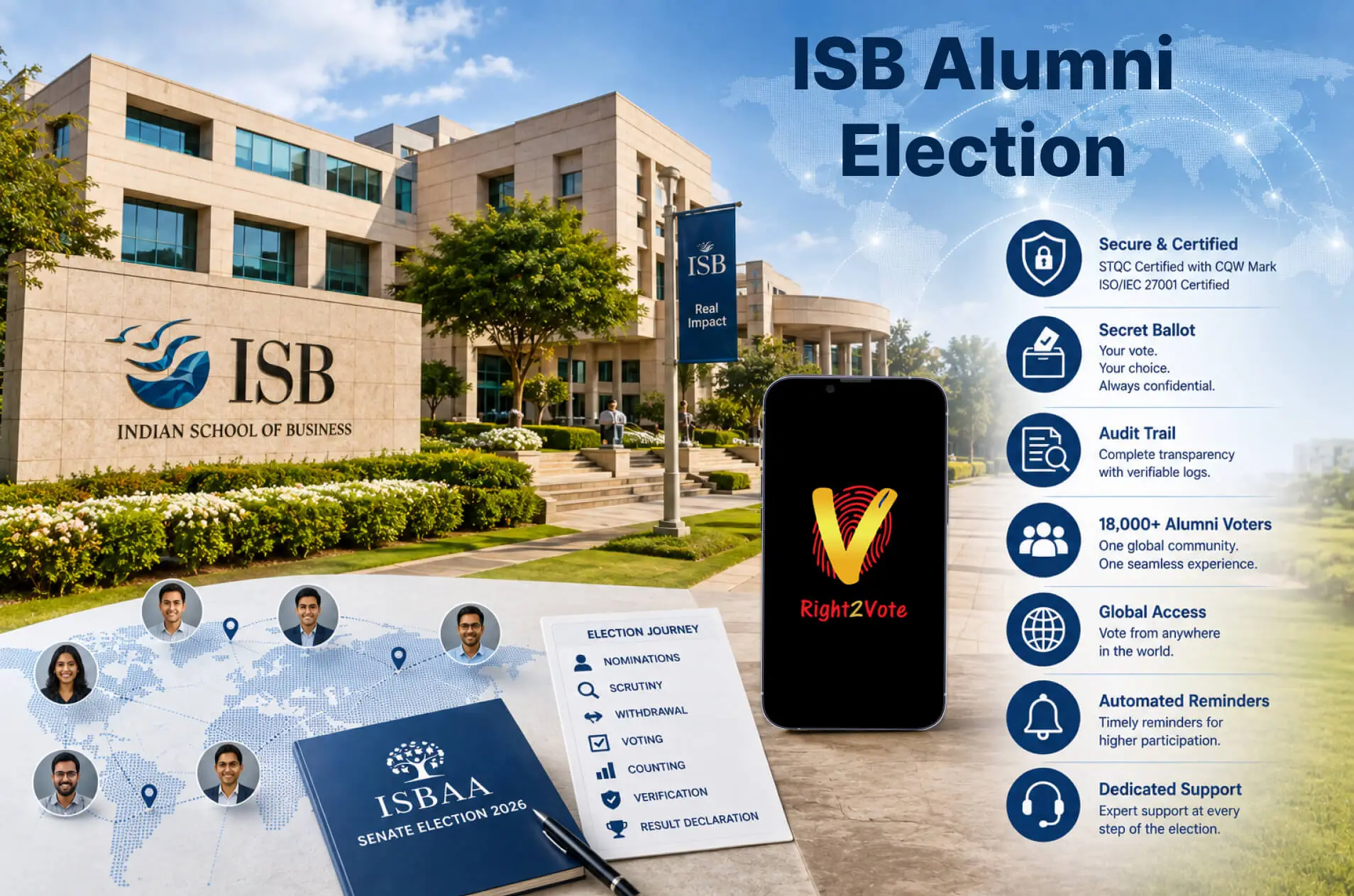 How ISBAA Conducted a Secure and Transparent Online Senate Election with Right2Vote
-
 Finding It Difficult to Conduct Elections? Make Elections Simple with Right2Vote
-
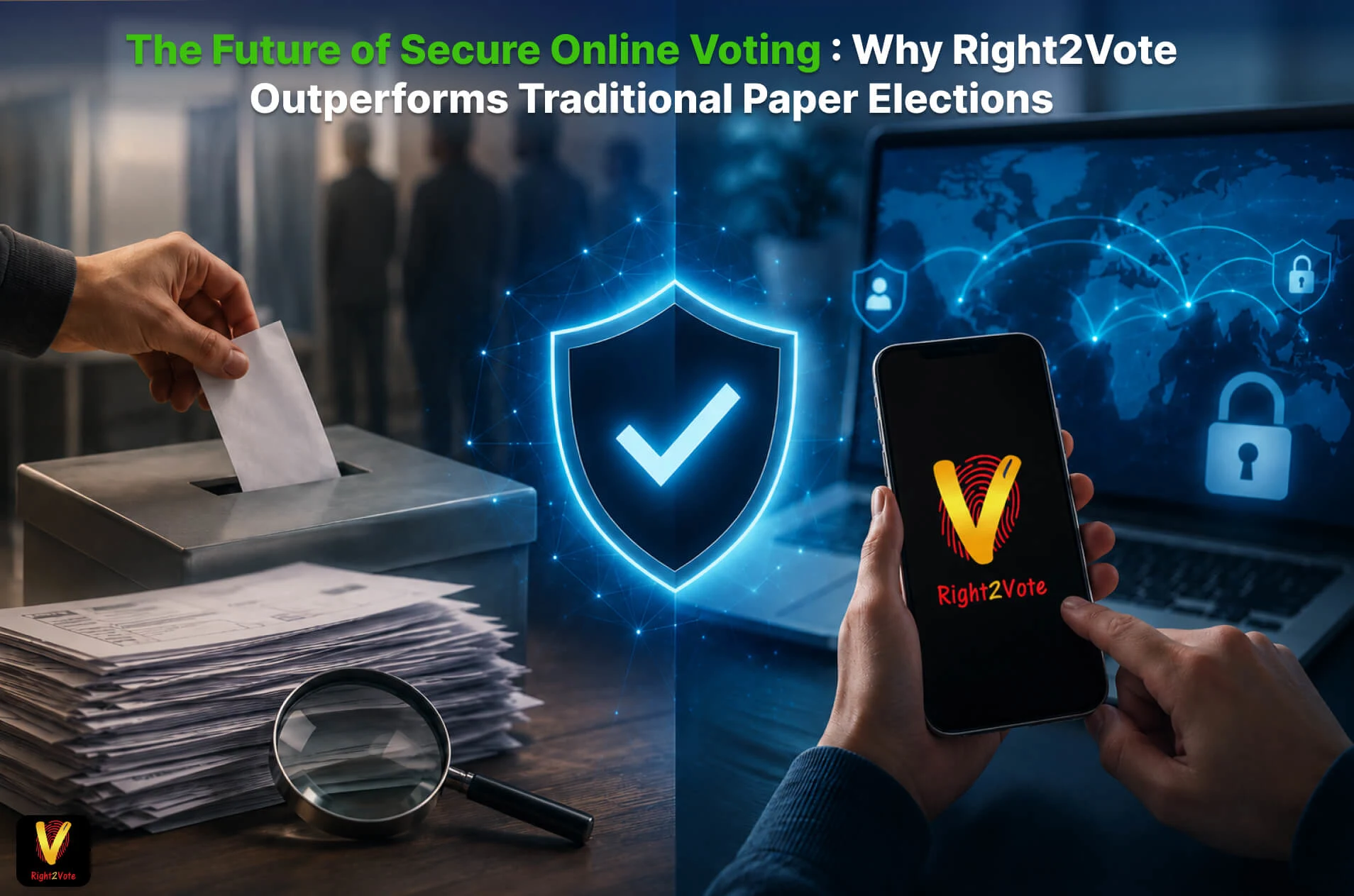 The Future of Secure Online Voting: Why Right2Vote Outperforms Traditional Paper Elections
-
 Mistakes to Avoid While Conducting Association & Housing Society Elections